
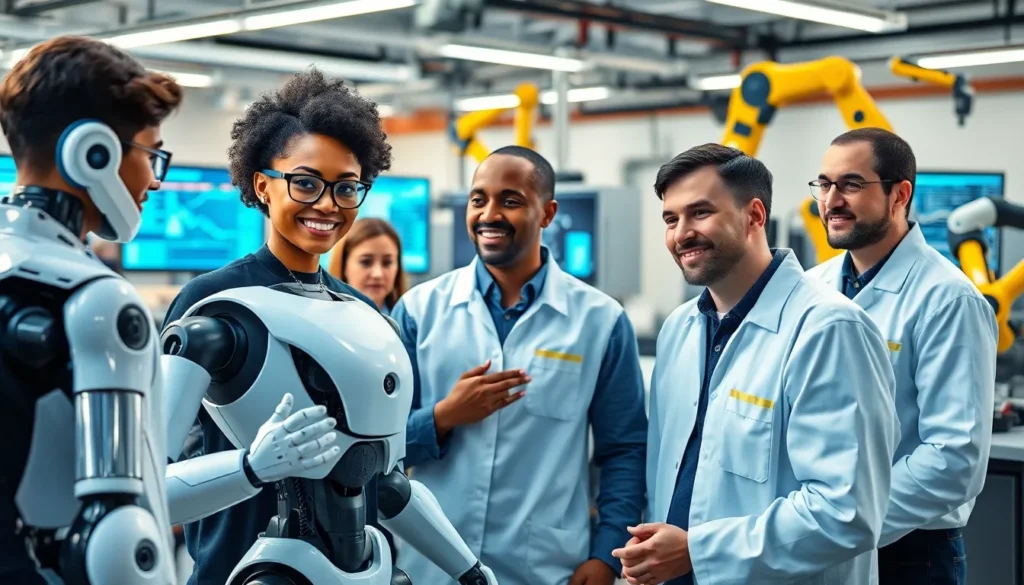
As robots inch closer to becoming the ultimate multitaskers, the future of robotics is nothing short of thrilling. Imagine a world where your coffee brews itself, your car drives you to work, and your vacuum cleaner has a personality. Sounds like a sci-fi movie, right? Well, buckle up because the future’s knocking, and it’s bringing a whole lot of innovation with it.
From AI-driven companions to drones that deliver your pizza faster than you can say “extra cheese,” robotics is set to redefine everyday life. As industries embrace automation and smart technology, the possibilities are endless. So, whether you’re a tech enthusiast or just someone who dreams of a robot butler, understanding these trends is key. Get ready to explore the fascinating advancements shaping the robotics landscape and how they’ll impact our lives in ways we can only begin to imagine.
Overview of Robotics Future Trends
Robotics is advancing rapidly, with innovations set to redefine daily experiences and industrial operations. Emerging technologies and industry applications stand at the forefront of this transformation.
Emerging Technologies
Artificial intelligence leads the charge in robotics developments. This technology enhances robots’ ability to process data, learn, and adapt to their surroundings. Machine learning algorithms enable robots to improve task execution over time. Advanced sensors, including LIDAR and cameras, facilitate better perception and navigation in dynamic environments. Collaborative robots, or cobots, work alongside humans safely, distinguishing them from traditional automation. Both 5G connectivity and the Internet of Things enhance communication between devices, creating smarter systems. Quantum computing also holds the potential to accelerate robotic processes, pushing the boundaries of what’s possible.
Industry Applications
Healthcare employs robotics to assist in surgery and patient care. Surgical robots improve precision while minimizing recovery time. Manufacturing utilizes robotics for assembly lines, achieving higher efficiency and consistency. Agriculture benefits from autonomous tractors and drones, optimizing crop monitoring and harvesting. Retail is integrating robots for inventory management, lowering labor costs. Logistics sees advancements in automated delivery systems, ensuring faster fulfillment. The military explores drones and robotic systems for reconnaissance and operational support, enhancing safety and effectiveness. Each industry illustrates the versatility and value of robotics in solving specific challenges.
Robotics in Healthcare

Robotics significantly transforms healthcare through technological advancements and innovative applications. This section focuses on two crucial areas: surgical robotics and rehabilitation technologies.
Surgical Robotics
Surgical robotics enable precise and minimally invasive procedures. These robots enhance surgeon capabilities, reducing patient recovery time and hospital stays. Systems like the da Vinci Surgical System assist in complex surgeries, allowing for greater control and flexibility. Surgeons can perform operations through small incisions, leading to less trauma and faster healing. Hospitals adopting robotic assistance report improved patient outcomes and reduced complications.
Rehabilitation and Assistive Technologies
Rehabilitation robotics support patient recovery through tailored therapies. Devices like exoskeletons provide mobility assistance, enabling patients with mobility impairments to regain independence. Technologies often include robotic arms that assist individuals in performing daily tasks. Research shows that incorporating robotics into rehabilitation can speed up recovery and enhance therapy effectiveness. Assistive robots also act as companions, improving the emotional well-being of users and fostering engagement.
Robotics in Manufacturing
Robotics in manufacturing transforms production processes through enhanced efficiency and innovation. The integration of advanced robotics shapes a new era in smart factory designs.
Automation and Smart Factories
Automation elevates manufacturing capabilities by streamlining workflows and optimizing operations. Smart factories harness IoT and AI technologies, enabling real-time data analysis for efficient decision-making. Implementing robotics reduces manual labor while increasing production speed and accuracy. The presence of automated machinery contributes to cost-effectiveness, allowing manufacturers to focus on innovation. As the need for flexibility rises, smart factories adapt quickly to changing demands. Companies that embrace automation gain a competitive edge by improving overall output and minimizing downtime.
Collaborative Robots (Cobots)
Collaborative robots, or cobots, enhance human-robot interaction within manufacturing settings. Unlike traditional robots, cobots assist workers without requiring extensive safety measures or cages. Their design prioritizes safety and usability, allowing seamless collaboration alongside human employees. Implementing cobots reduces the risk of injuries and increases productivity by automating repetitive tasks. Industries leveraging cobots experience a boost in efficiency and versatility in various applications. These robots evolve with workforce needs, adapting to new tasks and environments, making them invaluable assets to manufacturers.
Robotics in Transportation
Robotics significantly impacts transportation, shaping the future with innovations like autonomous vehicles and delivery drones.
Autonomous Vehicles
Autonomous vehicles redefine personal and commercial transport. Companies like Waymo and Tesla lead the way, deploying self-driving technology that enhances road safety and reduces traffic congestion. These vehicles use advanced sensors, machine learning, and AI to interpret surroundings, navigate routes, and make split-second decisions. A 2022 report indicated that autonomous vehicles could reduce traffic accidents by up to 90%, showcasing their potential. Furthermore, ride-sharing services integrate autonomous technology, improving passenger convenience while minimizing operational costs.
Delivery Drones
Delivery drones transform logistics with speed and efficiency. Organizations such as Amazon and Zipline implement these aerial robots for last-mile deliveries, responding to consumer demand for swift services. Drones navigate using GPS and advanced camera systems, ensuring precise location tracking. A study highlighted that drone deliveries can reach consumers in under 30 minutes, compared to traditional methods that may take hours or days. This rapid delivery system not only reduces transportation costs but also decreases the carbon footprint associated with conventional delivery vehicles.
The Role of Artificial Intelligence in Robotics
Artificial intelligence significantly shapes the future of robotics. Innovations in AI drive efficiency and functionality while enhancing robots’ abilities.
Machine Learning Enhancements
Machine learning helps robots learn from experiences and adapt to new situations. With algorithms that analyze vast datasets, robots can improve performance over time. This adaptability leads to better interaction with users and the environment. For example, robotic vacuum cleaners utilize machine learning to navigate complex spaces and optimize cleaning patterns. As robots gather data, they refine their tasks, boosting overall effectiveness and reducing errors. By incorporating feedback loops, robotics systems can update their approaches swiftly, facilitating continuous improvement in performance.
AI-Powered Decision Making
AI enables robots to make real-time decisions based on environmental data. Advanced algorithms process input from sensors, allowing robots to react instantaneously to changing conditions. This capability proves crucial in sectors like healthcare, where surgical robots rely on precise data to execute complex procedures. In manufacturing, robots assess production metrics to optimize workflows and reduce waste. Their ability to analyze trends leads to better resource allocation and increased productivity. As AI continues evolving, robots will exhibit enhanced autonomy, transforming their roles across various applications.
Ethical Considerations and Challenges
Navigating the ethical landscape of robotics involves addressing complex challenges.
Job Displacement Concerns
Job displacement emerges as a significant concern in the evolving robotics landscape. Many fear automation will lead to widespread unemployment. In the manufacturing sector, for instance, robotics has already replaced some manual labor with advanced automation. Reports suggest that up to 20 million manufacturing jobs could be at risk by 2030. Addressing this issue requires reskilling initiatives to help workers transition to new roles. Educational programs that focus on technology and robotics can prepare the workforce for emerging opportunities. Promoting collaboration between industries and educational institutions fosters a transition that benefits both employees and businesses.
Regulation and Safety Issues
Regulation and safety issues present critical challenges for the robotics industry. Ensuring that robots operate safely within environments where humans work is paramount. Standards for autonomous vehicles and drones, for example, need stringent guidelines to prevent accidents. Organizations like the International Organization for Standardization (ISO) work on developing safety standards for robotics. Compliance with safety regulations can help minimize risks associated with robotic innovations. Governments and regulatory bodies must create frameworks that evolve alongside technology. Collaborating with industry stakeholders ensures all parties prioritize safety while fostering innovation.
The future of robotics promises to reshape everyday life and industries alike. As advancements in AI and automation continue to evolve, robots will increasingly become integral to daily routines and essential in various sectors. With innovations like autonomous vehicles and smart manufacturing, the potential for efficiency and enhanced quality of life is immense.
However, the journey ahead isn’t without challenges. Addressing ethical considerations and preparing the workforce for shifts in job landscapes will be crucial. As society embraces these technological marvels, fostering a collaborative environment between humans and robots will lead to a more innovative and productive future. The next chapter in robotics is not just about technology; it’s about enhancing human experiences and creating a better world.


