
Table of Contents
ToggleIn a world where smartphones seem to get smarter by the minute, the unsung heroes behind the scenes are advanced microchips. These tiny powerhouses are like the brainy sidekicks of technology, working tirelessly to make everything from your favorite video games to cutting-edge AI possible. If you think your gadget is impressive now, just wait until you see what the next generation of microchips has in store.
Overview of Advanced Microchips
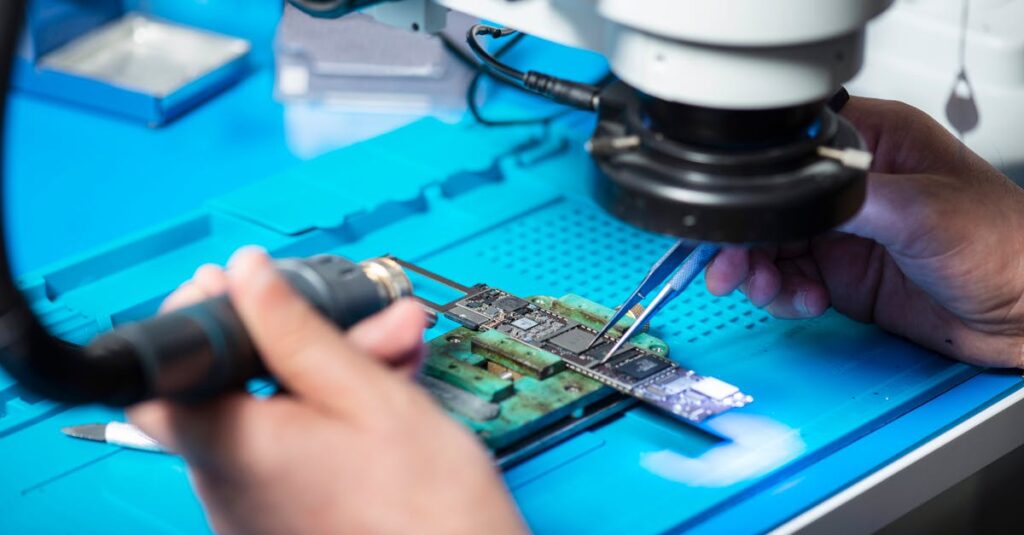
Advanced microchips represent a pivotal aspect of modern technology. These chips power devices across various sectors, including computing, telecommunications, and automotive industries. Containing millions, even billions, of transistors, advanced microchips support complex computations and processes.
Technological innovations depend on their capabilities. For instance, advanced microchips enable rapid processing in video game consoles, significantly enhancing user experience. Artificial intelligence applications also rely on these chips to execute tasks efficiently, improving functionality across devices.
Manufacturers continuously innovate microchip design and architecture. Emerging technologies like quantum computing and neuromorphic computing promise further enhancements. Additionally, advancements in fabrication techniques, such as 3D stacking, optimize performance and energy efficiency.
Performance metrics illustrate their significance. According to industry reports, microchips have achieved up to a 30% increase in performance year-over-year. This trend highlights the rapid evolution toward more powerful and efficient devices.
Advanced microchips serve as the foundation of contemporary technological advancements. Their design, capabilities, and ongoing innovations drive the future of computing and technology as a whole.
Key Technologies Behind Advanced Microchips
Advanced microchips rely on cutting-edge technologies that enhance their capabilities. Two critical aspects include semiconductor materials and fabrication processes.
Semiconductor Materials
Silicon remains the primary material for microchips due to its excellent electrical properties. Gallium nitride is gaining traction, especially for high-power applications, as it offers superior efficiency and thermal performance. In addition, researchers explore materials like graphene and carbon nanotubes for their potential to reduce size while improving speed. These innovative materials contribute to the development of more efficient and powerful microchips, supporting innovative applications in various fields.
Fabrication Processes
Photo lithography defines the fabrication process, allowing precise patterns to be etched onto silicon wafers. Advanced techniques such as extreme ultraviolet lithography enable engineers to create smaller transistors, enhancing performance. Moreover, chemical vapor deposition promotes high-quality materials during chip manufacturing. Innovations in 3D stacking techniques further optimize space and energy efficiency within microchips, resulting in improved performance. Such methodologies drive the continuous evolution of microchip technology, supporting the transformation of industries across the board.
Applications of Advanced Microchips
Advanced microchips play a significant role across various industries, driving innovations and improving functionality. Their applications range from consumer electronics to healthcare, reflecting their versatility and importance.
Consumer Electronics
Smartphones utilize advanced microchips to enhance processing speeds and multitasking capabilities. Laptops benefit from increased efficiency and performance, making them suitable for demanding tasks. Gaming consoles leverage these chips for immersive experiences, pushing graphics and gameplay to unprecedented levels. Smart home devices rely on microchips to facilitate automation and connectivity, creating integrated ecosystems for users.
Automotive Industry
Advanced microchips enable modern vehicles to incorporate cutting-edge features. Driver assistance systems depend on existing microchip technology to improve safety and efficiency. Electric vehicles benefit from enhanced battery management and efficiency control, aiding in performance. Autonomous driving relies on sophisticated microchip architectures to process vast amounts of data in real-time, paving the way for safer and more efficient commuting.
Healthcare Innovations
In healthcare, advanced microchips facilitate groundbreaking diagnostics and patient monitoring solutions. Wearable devices leverage microchip technology to track vital signs and promote personal health management. Medical imaging systems utilize advanced chips for faster processing and enhanced imaging capabilities. Telemedicine applications integrate advanced microchips to improve communication and deliver care remotely, transforming patient interactions and health outcomes.
Challenges in Advanced Microchip Development
Advanced microchip development faces significant hurdles that impact innovation and production. Addressing these challenges is essential for continued technological advancement.
Technological Limitations
Technological constraints hinder the miniaturization and performance of microchips. Power consumption and heat dissipation present major issues as transistors shrink. Each new fabrication process introduces complexities that require innovative engineering solutions. Quantum tunneling affects smaller transistors, limiting performance improvements. Manufacturers grapple with aligning transistor designs to meet performance expectations. As performance demands grow, they must explore cutting-edge materials such as graphene and carbon nanotubes for potential benefits. Continuous research into advanced fabrication techniques, like extreme ultraviolet lithography, is crucial to overcoming these limitations.
Supply Chain Issues
Supply chain disruptions significantly impact microchip production and availability. Global events, such as the COVID-19 pandemic, have strained logistics and raw material procurement. Shortages of essential materials affect manufacturing timelines and costs. Geopolitical tensions further complicate the sourcing of semiconductor materials. Manufacturers face challenges in scaling production to meet rising demand in consumer electronics and automotive industries. As a response, companies are investing in localized production facilities to mitigate the risks associated with global supply chains. Strengthening supply chains remains vital for sustaining the growth of advanced microchip technologies.
Future Trends in Advanced Microchips
Advancements in advanced microchips focus on significant emerging technologies that promise to reshape the industry. Quantum computing ushers in increased processing power, enabling faster and more complex computations. Neuromorphic computing imitates human brain function, enhancing machine learning capabilities and efficiency.
Innovations in materials science also play a crucial role. Researchers prioritize semiconductors like gallium nitride for high-efficiency applications. Graphene and carbon nanotubes offer potential for even smaller chip designs, leading to improved performance.
Manufacturing processes continually evolve to support these innovations. Photolithography advances ensure precise patterning, while extreme ultraviolet lithography further reduces transistor sizes. 3D stacking techniques maximize space and energy efficiency, benefiting both performance and functionality.
Growth in artificial intelligence drives demand for specialized microchips. Edge computing components process data locally, enhancing response times and reducing latency. Additionally, the Internet of Things increasingly relies on microchips for seamless connectivity among devices.
Regulatory changes may influence the microchip landscape. Policymakers advocate for local production, promoting national security and supply chain resilience. In this context, manufacturers explore domestic fabrication plants to secure operations and foster innovation.
Collaboration among organizations will be essential. Partnerships between tech companies and research institutions bolster development and share expertise. By fostering interdisciplinary approaches, the industry can overcome existing challenges and expedite breakthroughs.
Overall, these future trends signal a dynamic shift in advanced microchip technology. Investment in research and development remains critical to sustaining growth and addressing the ever-evolving demands of various sectors.
Advanced microchips are at the forefront of technological innovation shaping the future across multiple industries. Their ability to enhance performance and efficiency is transforming consumer electronics healthcare and automotive applications. As manufacturers continue to push the boundaries of design and fabrication challenges must be addressed to sustain this momentum.
Emerging technologies like quantum and neuromorphic computing hold the promise of even greater advancements. The ongoing evolution of materials and manufacturing processes will play a crucial role in overcoming existing limitations. Continued investment in research and collaboration among industry leaders is vital to harness the full potential of advanced microchips. The future is bright for this pivotal technology driving progress and connectivity in an increasingly digital world.


